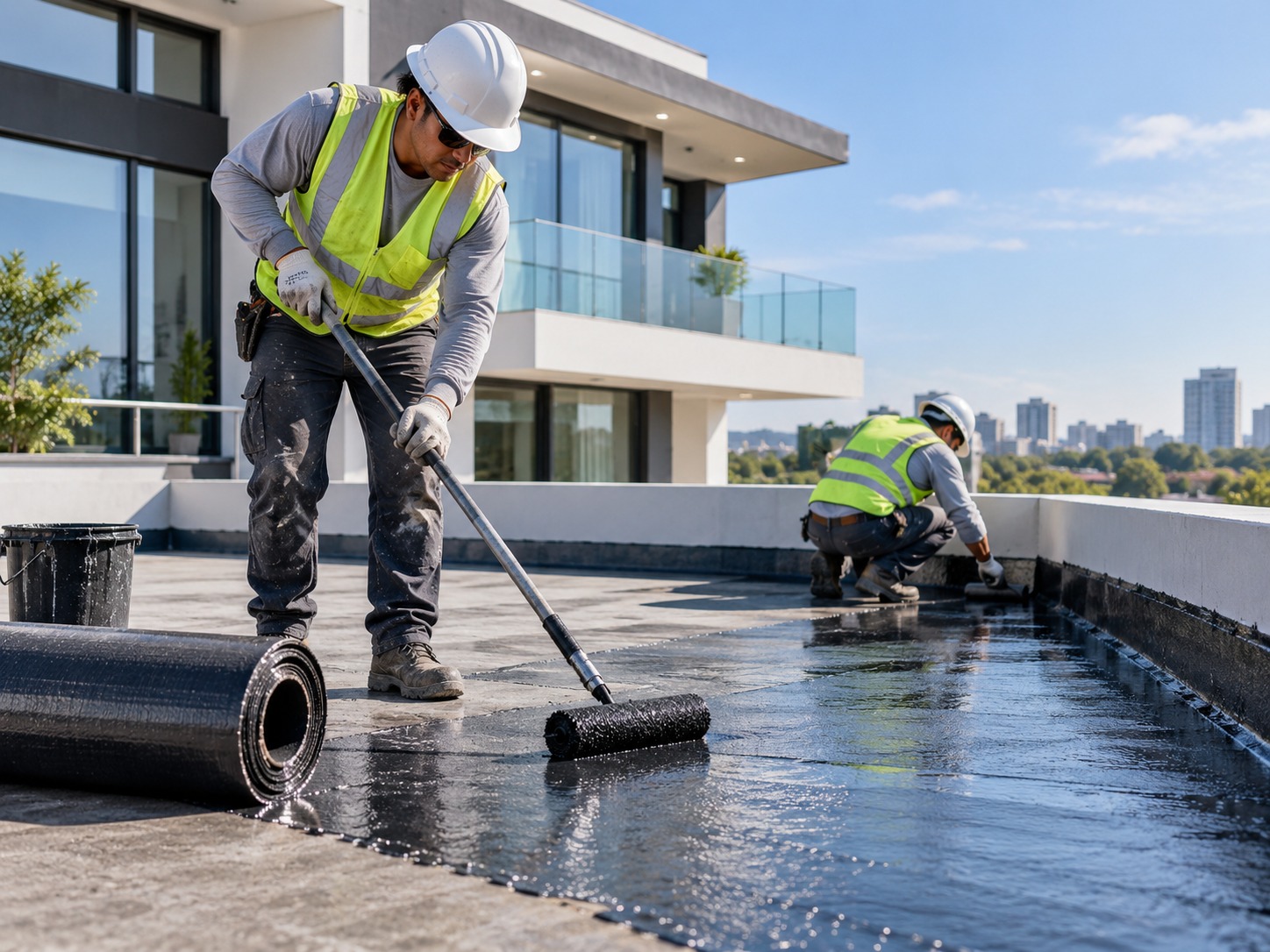
1. The NYC Flat Roof Dilemma
Unlike pitched suburban roofs where gravity sheds rainwater immediately, New York City flat and low-slope roofs function more like shallow bathtubs.
Water drains slowly towards internal cast-iron roof drains or exterior parapet scuppers. When winter snow piles up, ice dams form at the perimeter, keeping water ponding for weeks.
Choosing the right waterproofing system is the single most critical decision you will make to protect your building's structural timber, plaster ceilings, and electrical lines.
2. SBS Modified Bitumen Torch-Down: The Heavyweight Champion
SBS (Styrene-Butadiene-Styrene) modified bitumen consists of synthetic rubber blended with asphalt, reinforced with non-woven polyester and fiberglass mats.
Key Advantages:
- Outstanding Puncture Resistance: Can handle HVAC technicians walking on the roof with heavy toolbags.
- Superior Thermal Flexibility: Expands and contracts gracefully as NYC temperatures fluctuate from 10°F in January to 98°F in July.
- Cost-Effective Longevity: Delivers 20 to 30 years of proven service life at a competitive upfront cost.
- Mineral Granule UV Protection: The ceramic granule surface reflects sun rays and protects the asphalt core from breakdown.
Open-flame propane torches require licensed FDNY Certificate of Fitness holders (G-60 / F-60) and post-work fire watch monitoring. Green Building Construction maintains certified crews and comprehensive hot-work liability insurance.
3. Cold Liquid-Applied Membranes: The High-Tech Seamless Alternative
Cold-applied polyurethane and PMMA (polymethyl methacrylate) systems are liquid resins rolled or squeegeed over a polyester fleece fabric scrim. They chemically cure into a monolithic rubber skin with zero seams.
When Liquid Membranes Excel:
- Zero Open Flames: Ideal for wood-frame buildings, historic landmarks, or occupied hospitals where smoke or torch risks are forbidden.
- Accessible Terraces & Balconies: Extremely thin profile (typically 80 to 115 mils) allowing tile pavers or composite decking pedestals to be laid directly on top.
- Complex Geometry: Easily forms a seamless seal around intricate skylight curbs, I-beams, conduit pipes, and parapet coping stones.
- Odor-Free Formulations: Low-VOC formulas can be applied while building occupants remain safely inside.
4. Head-to-Head Comparison
| Feature | SBS Torch-Down | Cold Liquid-Applied |
| :--- | :--- | :--- |
| Primary Use | Main building flat roofs | Terraces, balconies & complex penetrations |
| Seams | 3-inch heat-welded overlaps | 100% monolithic (zero seams) |
| Fire Risk | Requires FDNY hot-work permits | Zero flame risk (cold-applied) |
| Puncture Resistance | Heavy-duty | Medium-high (fleece reinforced) |
| Warranty | Up to 25 Years | Up to 25 Years |
| Typical Cost | $$ (Moderate) | $$$ (Premium) |
Advising NYC building owners, residential co-op boards, and architects on code compliance, facade restoration, and envelope performance.