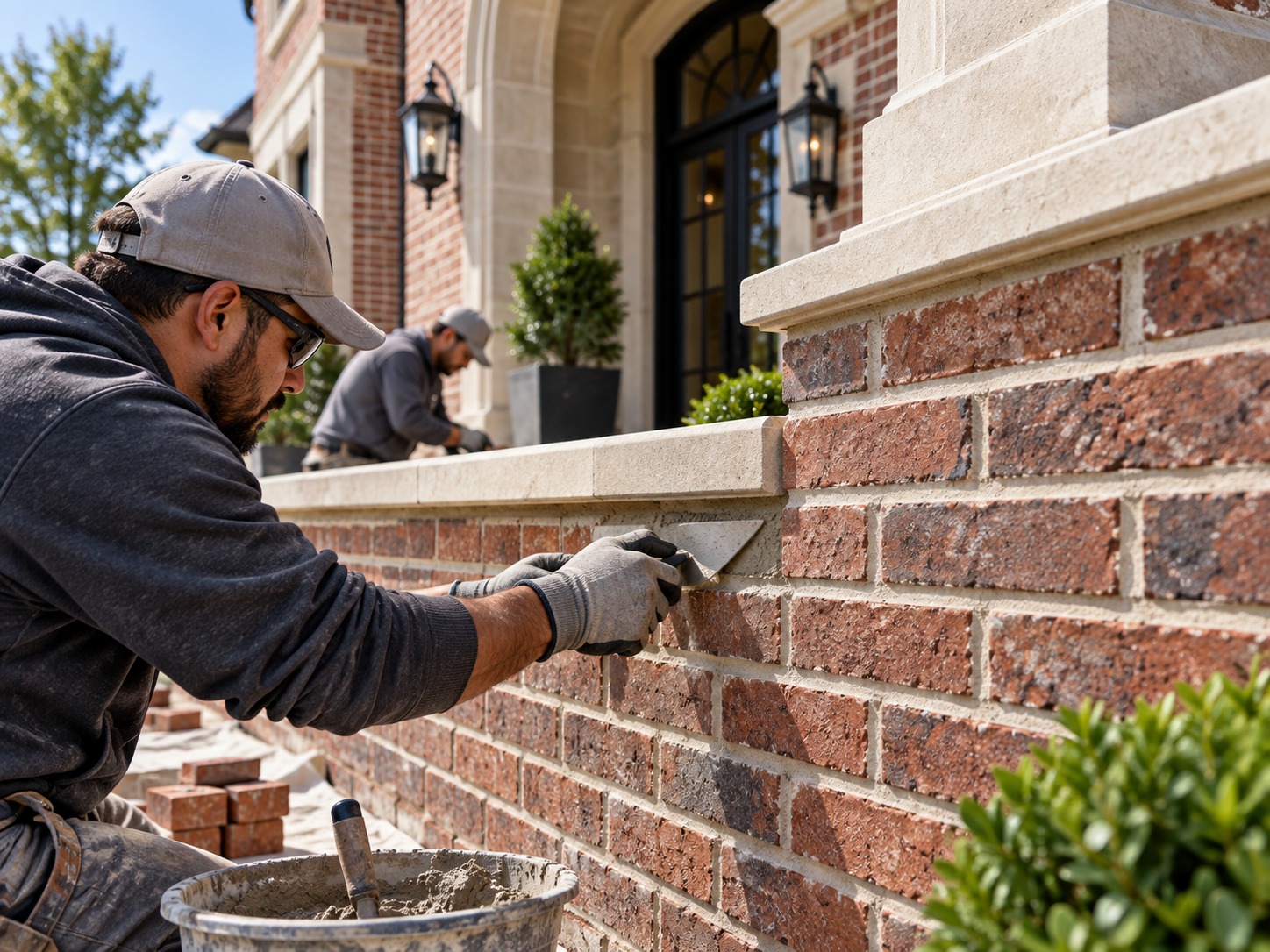
1. The Anatomy of Historic NYC Masonry
The historic brownstones and pre-war brick apartment houses of Manhattan, Brooklyn, and the Bronx were built using low-fired clay bricks and sand-lime mortars.
These walls were designed to act as 'mass masonry' systems. Rather than keeping every drop of rain out with impervious synthetic barriers, mass walls absorb moisture during storms and naturally breathe that moisture back out when the sun emerges.
The mortar functions as the sacrificial element in this system: it must always be softer and more vapor-permeable than the surrounding brick.
Inexperienced contractors frequently smear modern high-strength Type S or Portland cement onto historic brick. Because modern cement is impermeable, trapped moisture cannot evaporate through the joints. During winter freeze cycles, the expanding ice blows the front faces off the bricks — a catastrophic condition known as spalling.
2. Warning Signs Your Facade Needs Repointing
Inspect your building's exterior elevations for these five telltale indicators:
- 1Recessed & Powdery Joints: Mortar that has eroded back more than 1/4 inch from the face of the brick, or mortar that turns to dust when scraped with a coin.
- 2Efflorescence: White crystalline salt trails blooming across the brickwork, proving that water is actively migrating through the wall assembly.
- 3Step Cracking: Diagonal stair-step cracks through mortar lines, particularly near building corners or above window lintels.
- 4Parapet Leaning or Bowing: Parapets absorb rain from three sides; loose mortar will cause them to tilt inward or outward.
- 5Interior Plaster Peeling: Damp bubbling paint or crumbling plaster on inside perimeter walls after heavy easterly rainstorms.
3. The Architectural Standard for Repointing
At Green Building Construction LLC, historic masonry pointing follows rigorous conservation protocols:
A. Non-Destructive Mortar Removal
We rake out old, failed mortar to a uniform depth of 3/4-inch using dust-shrouded diamond blades and hand chisels. We never allow spinning blades to cut into the horizontal brick edges.
B. Joint Washing & Dampening
Before pointing, all joints are flushed with clean water. Dry bricks act as sponges; wetting the substrate prevents the bricks from prematurely sucking the moisture out of the fresh mortar before it hydrates.
C. Layered Hand Application
Fresh lime mortar is packed into the joint in successive layers (lifts) approximately 1/4-inch thick. Each layer is allowed to become 'thumb-print hard' before the subsequent layer is compacted on top.
D. Period Joint Striking
The final face is struck to match the building's historical design: concave, flush, or weathered wash profiles that shed water outward.
E. Breathable Siloxane Sealing
After a gentle detergent clean, we apply a siloxane water-repellent sealer that beads driving rain on the surface while maintaining 90%+ vapor breathability from within.
4. Navigating Landmarks (LPC) in Historic Districts
If your brownstone is situated within an LPC historic district (e.g., Mott Haven, Greenwich Village, Park Slope), you cannot alter the appearance or mortar color without a permit.
Our team prepares sample mock-up boards showing:
- Exact aggregate sand color and particle size
- Hydrated lime to white cement ratio
- Struck joint profile and mortar depth
Because our team prepares code-perfect filings, we routinely secure fast-track staff-level approvals without public hearing delays.
Advising NYC building owners, residential co-op boards, and architects on code compliance, facade restoration, and envelope performance.