1. Why Did You Receive a Sidewalk Violation?
Under New York City Administrative Code Section 7-210 (often called the 'Sidewalk Law'), real property owners are legally responsible for installing, repaving, and maintaining the sidewalk flags bordering their parcel.
NYC Department of Transportation (DOT) inspectors patrol all five boroughs, looking for specific structural and safety defects:
- Trip Hazards: Vertical trip hazards where adjacent concrete flags differ in elevation by 1/2 inch or more.
- Cracked & Spalled Flags: Severe surface flaking or diagonal cracks that allow water into the base.
- Improper Slope: Slabs that slope towards the building foundation rather than draining towards the street curb.
- Tree Root Heaving: City street tree roots pushing concrete slabs upward.
- Hardware & Curb Box Defects: Uncovered water shut-off valves or broken utility vaults.
When a Notice of Violation is mailed, you have 45 days to pull a permit and commence repairs with a licensed contractor. If ignored, the city hires a municipal contractor at prevailing wage city rates, billing your property tax account directly.
2. The Cost Difference: Private Contractor vs. City Work
Many owners assume letting the city handle the repairs is convenient. In reality, it is almost always significantly more expensive:
- 1Inflated Municipal Billing: City contractors charge maximum allowable rates including administrative overhead, engineering inspection fees, and city billing surcharges.
- 2Loss of Quality Control: City crews perform rushed, standard-minimum patch work. They will not match your driveway aesthetic, protect surrounding masonry, or level adjacent steps.
- 3Property Tax Liens: The invoice is transferred directly to the Department of Finance. Unpaid bills accrue substantial statutory interest and cloud your title when refinancing or selling.
Hiring a private, licensed contractor like Green Building Construction gives you direct oversight, better materials, warranty protection, and typically saves 30% to 50% compared to city invoices.
3. Step-by-Step Violation Removal Process
Clearing an NYC DOT sidewalk violation requires precision sequencing:
Step A: Onsite Survey & Permit Expediting
We inspect the exact flags marked with white paint by the DOT inspector. We verify utility locations, curb cuts, and file for the NYC DOT Sidewalk Construction / Street Opening permit.
Step B: Parks Department Tree Permit (If Applicable)
If cited flags surround a city street tree, we coordinate an inspection with the NYC Department of Parks & Recreation. Our crews perform hand excavation around structural roots and construct expanded tree pits or protective root bridges as required by forestry guidelines.
Step C: Demolition & Compacted RCA Base
We break out broken concrete and excavate down 8 to 10 inches. We install a 4-inch minimum crushed stone base (Recycled Concrete Aggregate), mechanically compacted to prevent ground settling.
Step D: The 4,000 PSI Pour & Hand Finishing
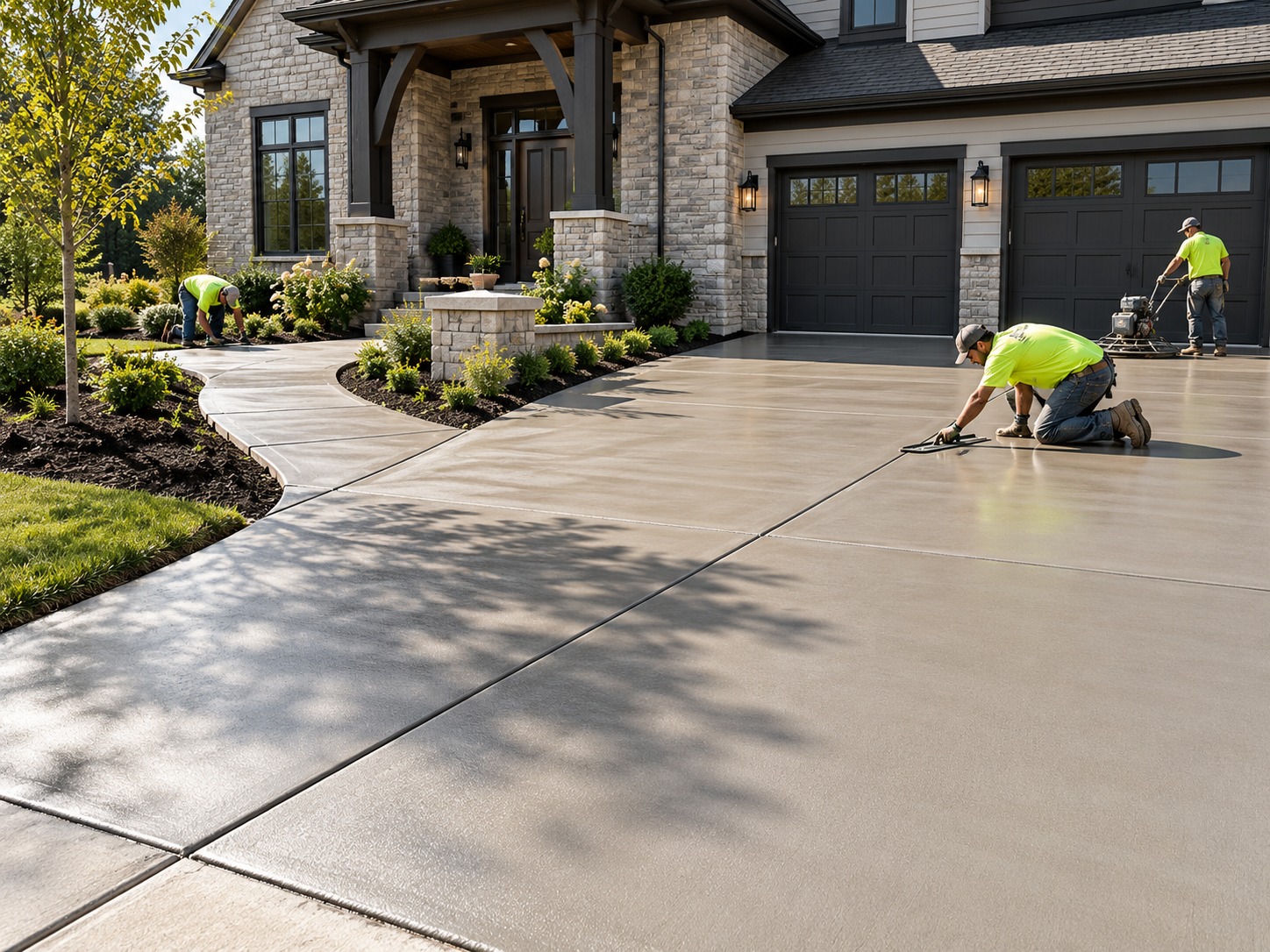
We pour certified 4,000 PSI air-entrained ready-mix with continuous steel rebar reinforcement. We tool 1/2-inch rounded borders, saw-cut expansion joints at 5-foot intervals, and apply the mandatory non-slip light broom finish.
Step E: Official DOT Dismissal Inspection
Once cured, our compliance desk submits the contractor sign-off and requests a re-inspection from the DOT Sidewalk Division. Within 10 to 14 days, an official Certificate of Dismissal is issued, permanently removing the violation from city records.
Your Certificate of Dismissal is a legal document required by title companies whenever you sell or refinance your New York property. We provide physical and digital copies for your records.
4. How to Prevent Future Concrete Failure in NYC
Winter in New York is brutal on concrete. To keep your sidewalks intact for decades:
- Never Use Rock Salt (Sodium Chloride): Rock salt destroys the chemical matrix of concrete during freeze-thaw cycles. Use calcium magnesium acetate (CMA) or sand for traction during the first two winters.
- Seal Expansion Joints: Ensure silicone or polyurethane joint fillers remain intact so water cannot seep beneath slabs and freeze.
- Prompt Snow Removal: Shovel snow promptly to prevent meltwater from refreezing into micro-fissures.
Advising NYC building owners, residential co-op boards, and architects on code compliance, facade restoration, and envelope performance.